What Salt Water Actually Does to Your Workout Gear (and How to Save It)
Quick Answer: Salt water damages workout gear mainly through crystallisation - dried salt crystals are abrasive and cut elastane fibres from the inside as the fabric flexes. Rinsing in cold fresh water within a few hours prevents most of it. Heat, not salt, is what finishes off elastic waistbands, so never wring, tumble dry, or leave wet gear in a hot car.
A season of beach workouts costs more in ruined leggings and sagging swimwear than most people account for. The frustrating part is that nearly all of that damage is preventable with a step that takes ninety seconds.

What does salt water actually do to synthetic fabrics?
Three separate mechanisms, and they compound.
1. Crystallisation and abrasion. When salt water dries, it leaves behind crystals inside the weave. These crystals are hard and sharp at a microscopic scale. Every time you bend, stretch, or walk in the garment, those crystals grind against the fibres. This is the primary mechanism, and it happens after you leave the beach, not while you are in the water.
2. Elastane degradation. Elastane, sometimes labelled spandex or Lycra, is the fibre that provides stretch and recovery. It is by far the most vulnerable component of any activewear blend. Salt, chlorine, heat, and UV all attack it, and once it goes the garment does not recover - the fabric stays stretched, the waistband stops gripping, and the leggings sag at the knee.
3. Colour loss. Salt combined with sun accelerates fading considerably, particularly on blacks and deep colours, which develop a chalky or greyish cast.
What survives best: high-nylon and high-polyester blends with lower elastane content, and anything specifically labelled for chlorine resistance. What suffers most: cotton blends, anything with high elastane, and light or bright dyes.
A useful mental model: the salt is not the villain so much as the abrasive left behind by the salt. Remove it before it dries into the fabric and most of the problem disappears.
The rinse routine that saves most of the damage
The single highest-value habit, and it needs to happen sooner than people think.
Immediately - within a few hours:
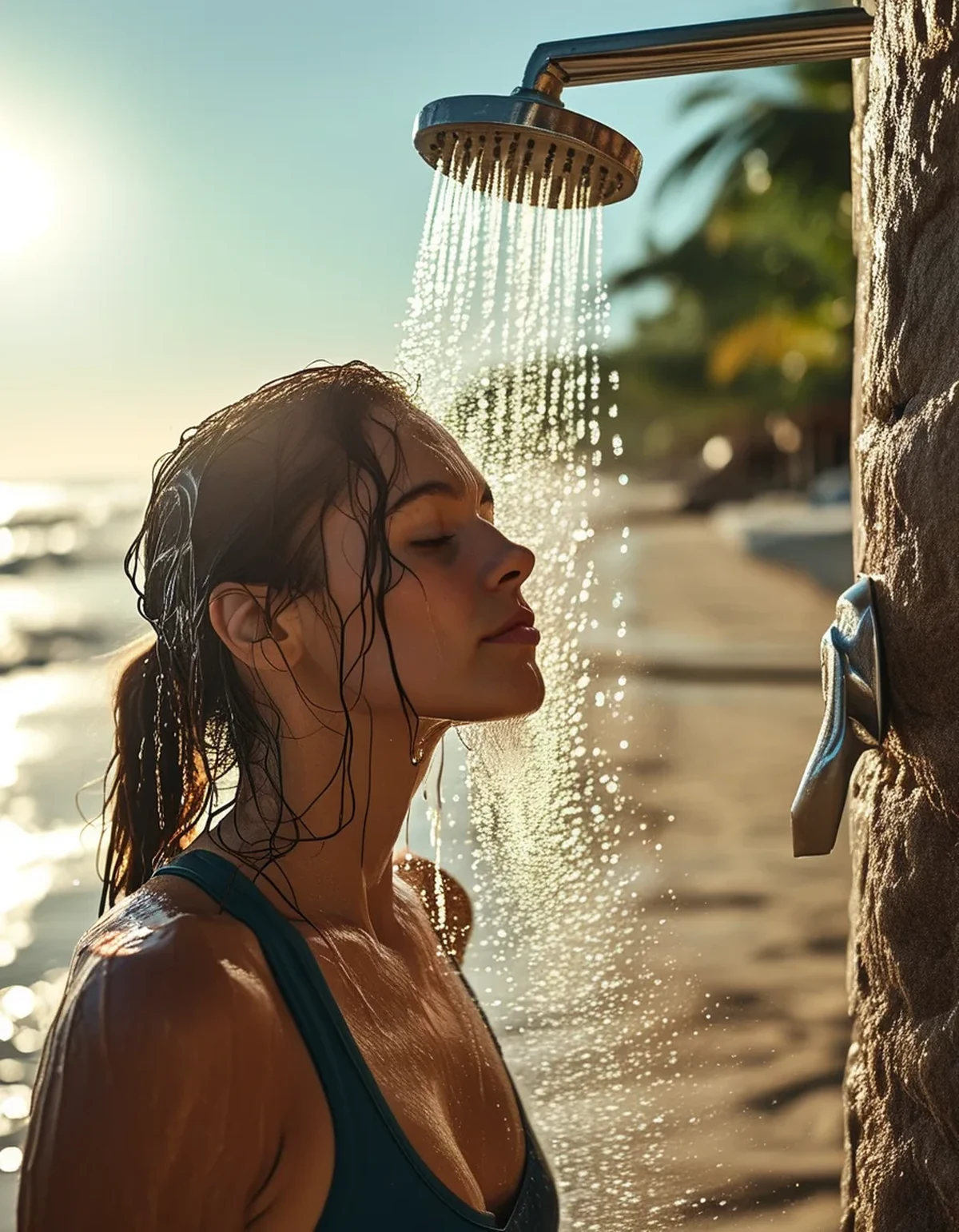
- Rinse in cold fresh water. The beach shower is fine. Cold, not warm - heat accelerates elastane breakdown.
- Rinse for longer than feels necessary. 60 to 90 seconds per garment, working water through the fabric rather than over it. Salt sits in the weave, not on the surface.
- Do not wring. Twisting stresses the elastane exactly where it is already weakened. Press water out between your palms or against a towel.
Back home:
- Soak for 20 to 30 minutes in cold water if the garment was in the sea rather than just splashed. A tablespoon of white vinegar in the water helps dissolve mineral residue.
- Wash cold - 30C or below - on a gentle cycle, inside out, in a mesh bag.
- Skip fabric softener entirely. It coats synthetic fibres, traps odour, and destroys moisture-wicking performance. This is the most common accidental mistake in activewear care.
- Use minimal detergent. Excess detergent does not rinse out of technical fabric and builds up, which is why gear starts smelling despite being washed.
Drying:
- Air dry flat, in shade. Hanging wet stretch fabric lets gravity pull the garment out of shape while the fibres are at their most vulnerable.
- Never tumble dry. Heat is the fastest way to finish off elastane.
- Never leave wet gear balled up in a bag or a hot car. Warm, wet, and salty is the worst combination there is, and a few hours in a hot boot can do more damage than a whole day in the sea.
Sand and chlorine need different handling
Salt is not the only thing your beach gear is dealing with.
Sand: mechanical, not chemical.
Sand does not degrade fibres chemically - it just abrades them, and it gets everywhere. The mistake is rubbing sandy fabric, which grinds the grains through the weave.
- Let it dry completely first, then shake it out. Wet sand clings; dry sand falls away.
- Shake outward, do not brush inward.
- Rinse from the inside out so sand exits the way it came in.
- Baby powder or talc on skin before dressing helps sand release rather than stick - an old lifeguard trick.
- Check pockets and seams. Sand trapped in a seam will keep abrading for weeks.
Chlorine: chemical, and harsher than salt.
If your beach day includes a pool, that gear needs different care. Chlorine attacks elastane more aggressively than salt does, which is why pool swimwear loses shape in a season while ocean swimwear can last for years.
- Rinse immediately, always - chlorine keeps working while the garment is damp
- Consider a swimwear-specific wash that neutralises chlorine residue
- Rotate two swimsuits rather than wearing one repeatedly. Elastane needs roughly 24 hours to recover its shape, and alternating suits can double their usable life
Sunscreen is the third contaminant and the one people forget. Oil-based sunscreens stain fabric, particularly light colours, and can permanently mark elastane. Let sunscreen absorb for 15 minutes before dressing, and treat any stains before washing rather than after - heat sets them.
5 Mistakes That Kill Beach Workout Gear
1. Leaving wet gear in the car. The most destructive single habit. A closed car in late summer reaches temperatures that degrade elastane rapidly, and wet salty fabric at that temperature is a worst case. Take a plastic bag for wet gear and unpack it the moment you get home.
2. Hot washing to get rid of the smell. The smell is bacteria and detergent residue trapped in the fibres, and hot water does not fix it while it does damage the fabric. The fix is a cold vinegar soak - half a cup in a basin of cold water for 30 minutes - followed by a cold wash with a small amount of detergent.
3. Fabric softener. Worth repeating because it is so common. It coats synthetic fibres, ruining wicking and sealing in odour. There is no situation where it belongs in an activewear wash.
4. Drying on a hot radiator or in direct sun. Both are heat, and heat is the enemy of stretch. Shade drying takes an hour longer and costs the garment nothing.
5. Wearing the same swimsuit every single day of a holiday. Elastane recovers with rest. A suit worn seven days running will be noticeably baggier by the end of the week than two suits alternated over the same period. This is the cheapest life extension available - buy the second suit rather than replacing the first one twice as often.
The bonus mistake: assuming expensive gear is more resistant. Premium activewear often has higher elastane content for comfort, which makes it more vulnerable, not less. Price is not durability.
FAQ: Beach Gear Care Questions, Answered
How long can salt water sit in fabric before it does damage?
Damage begins as it dries and crystallises, so the window is a few hours. Rinsing before the garment fully dries prevents the bulk of it.
Does white vinegar really help?
For mineral and salt residue, yes - it dissolves deposits and neutralises odour-causing bacteria. Use it in a cold soak rather than the wash cycle, and do not combine it with bleach.
Can I fix leggings that have already lost their stretch?
Usually not. Degraded elastane does not recover. A cold soak may improve the feel slightly by removing residue, but permanent sagging means the fibres are done.
Is machine washing safe for swimwear?
Cold, gentle cycle, inside out, in a mesh bag - yes for most modern swimwear. Hand washing is gentler, and for anything with structure or underwire it is worth the extra minutes.
What fabric should I look for if I am at the beach constantly?
High polyester or nylon content with lower elastane, or anything labelled chlorine resistant. Darker colours in polyester hold up better than bright dyes. Expect any high-stretch garment to be a consumable rather than a lifetime purchase.
TL;DR:
- Salt damages gear through abrasive crystals left behind as it dries, not while you are swimming
- Rinse in cold fresh water within a few hours - 60 to 90 seconds per garment, no wringing
- Heat is the fastest killer of elastane: no tumble drying, no hot cars, no radiators
- Let sand dry before shaking it out, and treat chlorine as harsher than salt
- Rotate two swimsuits rather than wearing one daily - elastane needs about 24 hours to recover
Beach workout gear does not have to be a seasonal write-off. The whole difference comes down to a ninety-second rinse before the salt dries and never letting the gear sit warm and wet. Everything else is refinement.
See It in Motion
Seen here: High Waist Embossed Yoga Leggings with Side Pockets — shop it on bubblelime.com
Keep Reading
This article is for general informational and styling purposes only. Fit, sizing, and product availability may vary.