The Beach Workout Timing Mistake That Turns a Good Session Into a Bad One
The exact same beach workout — sand sprints, bodyweight circuits, a swim — can feel energizing at nine in the morning and genuinely dangerous at one in the afternoon, and a lot of people don’t realize how much of that difference is timing rather than effort. Sand and open sun compound heat exposure faster than a shaded gym or even a regular outdoor run. Here’s why the timing window matters this much specifically at the beach, what the danger signs actually look like, and the windows that keep a session both effective and safe.

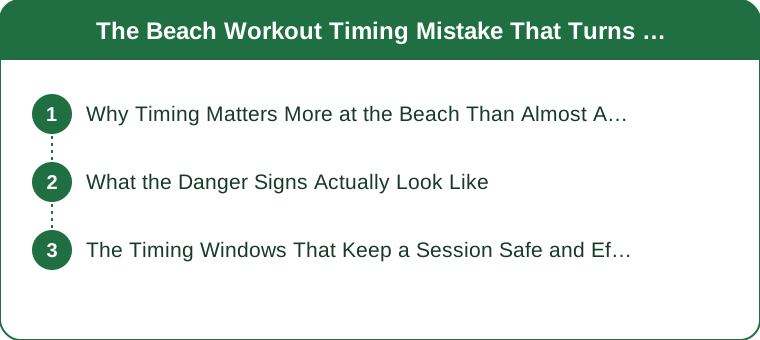
Why Timing Matters More at the Beach Than Almost Anywhere Else
The compounding factors: the the-sand-reflects-heat-back-up (the light-colored sand reflecting sunlight and radiating stored heat back upward, creating a second heat source in addition to direct sun that a grass field or track doesn’t produce — the double-heat-exposure-from-above-and-below), the the-ocean-breeze-creates-false-cooling-sensation (the a steady coastal breeze evaporating sweat quickly and masking how hot the body is actually getting, delaying the normal warning signs of overheating — the wind-hides-the-warning-signs-sweat-normally-gives), the the-sand-training-itself-raises-effort-and-heat-production (the the extra muscular effort required to move through soft sand — echoed in sand-workouts-for-a-full-body-burn-guide — generating more internal body heat than the same movement on firm ground, stacking on top of the external heat — the harder-effort-adds-internal-heat-to-external-heat), the the-water-reflection-adds-a-third-heat-source (the sunlight bouncing off the water’s surface adding yet another reflected heat source beyond the sand, particularly intense on a clear day — the water-reflection-is-an-often-overlooked-third-factor), the the-midday-uv-and-heat-peak-together (the UV intensity and air temperature both peaking in roughly the same midday window, meaning the worst sun exposure and the worst heat exposure happen to overlap rather than offset — the two-risks-peaking-together-multiplies-not-adds), and the reframe (the beach environment stacking three separate heat sources that a typical outdoor workout location doesn’t combine, making timing a bigger factor here than almost anywhere else).

What the Danger Signs Actually Look Like
Recognizing overheating early: the the-stopping-sweating-is-a-late-not-early-sign (the a sudden decrease in sweating during a hot workout signaling the body’s cooling system is failing, not that the workout has gotten easier — the less-sweat-is-worse-not-better), the the-dizziness-on-standing-after-sand-work (the lightheadedness when standing up from a plank or ground exercise on hot sand being an early and often ignored heat-stress signal — the dizziness-on-standing-is-worth-stopping-for), the the-headache-during-not-after (the a headache developing during the session itself, distinct from normal post-workout fatigue, often indicating heat building faster than the body can dissipate it — the mid-workout-headache-is-a-different-signal-than-end-of-workout-tiredness), the the-skin-that-feels-hot-and-dry-rather-than-sweaty (the skin that has gone from sweaty to hot and dry mid-session being a more urgent sign than most people realize, sometimes indicating the shift from heat exhaustion toward heat stroke — the dry-hot-skin-is-a-more-urgent-signal-than-fatigue), the the-confusion-or-irritability-out-of-proportion-to-the-workout (the uncharacteristic irritability or trouble concentrating during a normally manageable session pointing to heat’s effect on the brain before it’s obvious anywhere else — the mental-symptoms-can-arrive-before-physical-collapse), and the frame (the warning signs running from subtle — reduced sweat, mild dizziness — to serious, and the response should be to stop immediately at the subtle end rather than waiting for the serious end to confirm the problem).
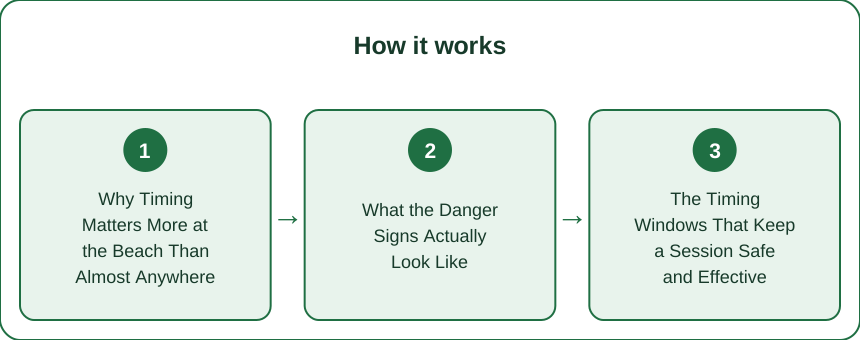
The Timing Windows That Keep a Session Safe and Effective
The practical schedule: the the-early-morning-before-nine-is-the-safest-default (the the hour or two after sunrise offering the lowest combined heat and UV load of the day while sand is often still cool from overnight, per beach-workout-guide’s general session-planning logic — the earliest-window-is-the-easiest-safe-default), the the-late-afternoon-after-five-as-the-second-option (the the couple of hours before sunset offering a second safe window once the midday peak has passed, useful for anyone who can’t train early — the late-afternoon-is-the-realistic-backup-window), the the-avoid-eleven-to-three-entirely-when-possible (the the late-morning-through-midafternoon stretch combining peak UV with peak air and sand temperature, the single window worth actively avoiding for anything beyond light walking — the eleven-to-three-is-the-window-to-actively-avoid), the the-cloud-cover-doesnt-remove-the-risk (the overcast skies cutting visible heat sensation while UV exposure and air temperature can remain nearly as high, a common source of underestimated risk — the clouds-reduce-the-feeling-of-heat-not-the-actual-exposure), the the-hydration-timing-matters-as-much-as-workout-timing (the starting hydrated well before arriving rather than only drinking during the session, since dehydration compounds every other heat risk listed above — the pre-hydration-is-part-of-the-timing-strategy-not-separate-from-it), and the frame (the safe windows sitting before nine and after five, with the late-morning-to-midafternoon stretch avoided regardless of how the day feels, since the beach’s combined heat sources make that window riskier than it appears)).
The same beach workout can be genuinely safe before nine in the morning and genuinely risky by one in the afternoon, because sand, water reflection and direct sun stack into a combined heat load that most other outdoor settings don’t produce. The early warning signs — reduced sweating, dizziness on standing, a headache that shows up during the session rather than after — are worth treating seriously and immediately rather than waiting them out. Training in the early morning or the couple of hours before sunset, and actively avoiding the late-morning-to-midafternoon window regardless of how the weather feels, keeps the same workout that could be dangerous at the wrong hour both effective and safe at the right one.
See It in Motion
Seen here: Racerback Tank Top - White — shop similar styles on bubblelime.com
Keep Reading
This article is for general informational and styling purposes only. Fit, sizing, and product availability may vary.