The End-of-Summer Beach Workout: What Changes When the Water Cools
Quick Answer: In late August the sea holds heat longer than the air, which flips the usual pattern: water feels warm at dawn and the wind feels cold after sunset. Train earlier or later than in July, add a layer for the cool-down rather than the warm-up, and use the firmer post-storm sand that late-summer swells produce - it is the best training surface of the year.
The beach in late August is a genuinely different training environment than it was six weeks ago, and most people keep running the July plan until it stops working. A few adjustments make the last five or six weeks of the season the most productive ones.

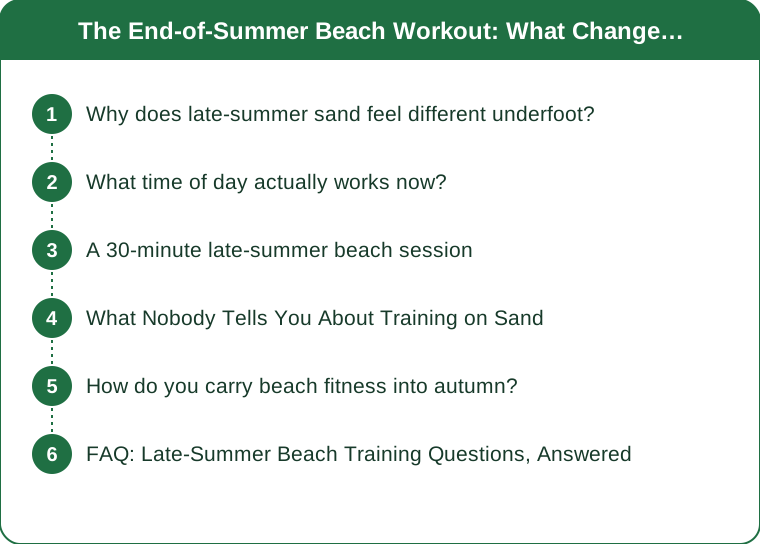
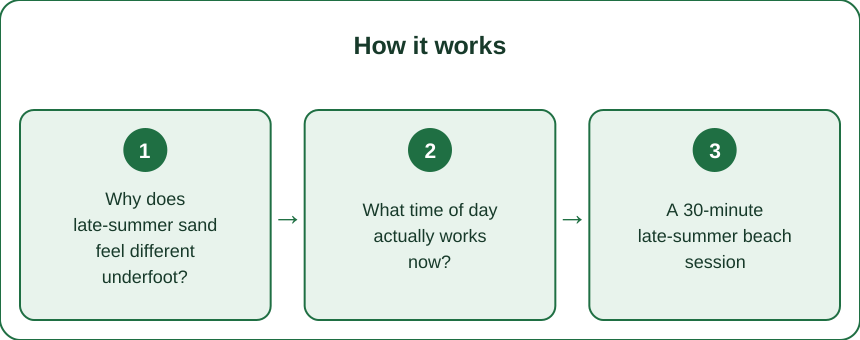
Why does late-summer sand feel different underfoot?
Because it usually is different, and the reason is seasonal storm activity.
Late-summer swells rework the beach profile. Bigger sets carry fine sediment offshore and leave a coarser, more compact surface behind, particularly in the intertidal zone. Combined with cooler nights holding moisture in the sand longer into the morning, you get a firmer surface than the dry, deep sand of midsummer.
Why that matters for training: firm damp sand is roughly comparable in energy cost to a soft trail, whereas dry deep sand can raise the metabolic cost of running substantially. That is a large difference in what a given session actually demands of you.
The practical upshot: the same 20-minute run that was brutal in July may feel notably easier in late August, and it is the surface that changed, not your fitness.
How to use it: if you have been avoiding beach running because of the effort, late summer is when to try it again. If you have been using deep sand deliberately for the difficulty, you now need to walk up the beach to find it - the dry sand above the tide line is where the hard surface has moved to.
Check the tide chart, not the clock. The firm zone is only exposed for a few hours around low tide, and that window shifts roughly 50 minutes later each day.
What time of day actually works now?
The July answer was early morning to avoid heat. The August answer is different.
Water retains heat far longer than air does. In late summer, sea temperature is typically near its annual peak while air temperature has already begun dropping - especially overnight. That inverts the usual relationship.
At 7am in late August: the air can be cool, the wind offshore and brisk, and the water noticeably warmer than the air. Swimming feels good; standing around wet does not.
At 6pm: the sand is still holding the day’s heat, the air is pleasant, and the water still feels good. This is the best training window of the day in late summer, and it is the opposite of the July advice.
The trap is the cool-down. Once the sun drops, the temperature falls quickly and an evening onshore breeze on wet skin is genuinely cold. People who trained happily through July in a sports bra and shorts get caught out repeatedly in the last weeks of August.
Simple fix: bring a layer for after, not before. The warm-up does not need it; the fifteen minutes of standing around afterwards absolutely does.
A 30-minute late-summer beach session
Built for firm damp sand near low tide, adjustable for any fitness level.
Warm-up (5 minutes): walk briskly along the waterline, then 3 rounds of 10 walking lunges, 10 arm circles each direction, and 20 seconds of easy skipping.
Block 1 - Sand intervals (10 minutes):
- 30 seconds hard run on firm damp sand
- 90 seconds easy walk back
- Repeat 5 times
Run along the beach, not up and down the slope - the camber of a sloped beach loads one leg differently from the other and is a common source of hip and IT band irritation. If your beach is noticeably sloped, run out and back so each leg gets both sides.
Block 2 - Strength circuit (12 minutes):
- 12 sand squat jumps
- 10 push-ups with hands in dry sand (the instability is the point)
- 20 walking lunges
- 30-second plank, forearms in wet sand
- Rest 60 seconds, repeat 3 times
Cool-down (3 minutes): walk in ankle-deep water. Cool water on the lower legs after loading them on an unstable surface feels excellent, and the walking keeps circulation up.
Put your layer on before you stop moving, not after you have started to feel cold.

What Nobody Tells You About Training on Sand
Your calves and feet take most of the adaptation. Sand removes the elastic return you get from a firm surface, so the calf complex and the small intrinsic foot muscles do far more work. If you go from zero to three sand sessions a week, that is where the complaint shows up.
Barefoot is not automatically better. It is excellent for foot strength in small doses and a fast route to overuse if you jump straight to long sessions. Start at 10 minutes barefoot and build across several weeks.
Check the sand before you commit. Late-summer beaches accumulate shell fragments, and post-storm debris is common. A quick walk of the stretch you plan to use is worth doing every session, not just the first.
Pace judgement is unreliable on sand. A pace that feels moderate on sand is usually harder in effort terms than the same pace on road. Go by breathing rather than by watch.
The wind is a bigger factor than the heat now. An offshore breeze that felt refreshing in July is a genuine chill factor on wet skin in late August, and it is the most common reason people cut sessions short in the last weeks of the season.
Sunscreen still matters in September light. Lower sun angle feels gentler and reflected light off water and pale sand is still substantial.
How do you carry beach fitness into autumn?
The season ends abruptly for most people, and the transition is where the gains get lost.
What sand training actually gave you: unstable-surface strength through the ankle and foot, higher-than-usual calf endurance, and a lot of low-intensity aerobic work in pleasant conditions. Those are worth keeping.
The indoor equivalents:
- Single-leg balance work - 60 seconds per side on a folded towel or cushion, three times weekly, preserves most of the ankle stability benefit
- Calf raises with a slow lowering phase - 3 sets of 12, four seconds down, replaces the loading you were getting free
- Barefoot mobility - two minutes of toe spreads and short-foot drills after any session
The mistake to avoid: going straight from soft sand to road running in autumn without a transition. Sand’s forgiving surface means your tissues have adapted to less impact, and a sudden switch to pavement at the same volume is a classic overuse setup.
Bridge it over two weeks: alternate sand and firm ground sessions, then shift the ratio. Persistent pain rather than ordinary soreness is worth a professional opinion. This is general information, not medical advice.
One more thing worth doing: most beaches are almost empty on weekday mornings in September, and the water stays swimmable weeks after everyone stops going. The season is longer than the calendar suggests.
FAQ: Late-Summer Beach Training Questions, Answered
Is running on sand bad for your knees?
Sand reduces impact forces compared with pavement, which many people find easier on the knees. The trade-off is more work for the ankles and calves. Beach camber is the more common source of one-sided complaints.
How much harder is deep sand than firm sand?
Substantially - the energy cost of running in soft dry sand is far higher than on a firm surface. Treat a deep-sand session as a hard day, not an easy one.
Do I need shoes on sand?
For intervals and anything over 15 minutes, especially if you are new to it, shoes reduce the overuse risk considerably. Barefoot is best used deliberately and in short doses.
When does the water actually get too cold?
Sea temperature typically peaks in late summer and declines through autumn, lagging the air by several weeks. In most temperate regions the water stays comfortable for swimming well past the point when the beaches empty out.
TL;DR:
- Late-summer swells leave firmer sand - the same session gets easier and it is the surface, not you
- Evening now beats early morning; the water holds heat while the air has started cooling
- Bring the extra layer for after the session, not before it
- Time sessions around low tide for the firm damp strip, which shifts about 50 minutes later daily
- Bridge into autumn over two weeks rather than switching straight from sand to pavement
Weekday September mornings are the emptiest and best beach training of the year. The season is longer than the calendar suggests.
See It in Motion
Seen here: UPF 50+ Racerback Yoga Tank Top — shop it on bubblelime.com
Keep Reading
This article is for general informational and styling purposes only. Fit, sizing, and product availability may vary.